- Quick summary — before you read on, here is what matters most:
- Why You May Receive an HMRC Savings Account Tax Warning
- What is the HMRC Savings Account Tax Warning?
- When and Why Does HMRC Send a Tax Warning?
- How Does HMRC Know About Your Savings Interest?
- How HMRC Collects Tax on Savings Interest
- What Happens If You Ignore an HMRC Tax Warning?
- How to Check If You Owe Tax on Savings Interest?
- How to Legally Avoid Paying Tax on Your Savings?
- What Should You Do If You Receive a Tax Bill from HMRC?
- Frequently Asked Questions
- Conclusion
Most people put money in a savings account and stop thinking about it. It sits there, it grows, it feels safe. For a long time, that was completely true, because interest rates were so low that savings barely earned anything worth taxing. Then rates rise, returns grow, and quietly a tax clock starts running on money most people assumed was entirely their own.
We know this because we have seen it walk through our door. Clients who have saved carefully for years, never missed a tax obligation in their lives, suddenly holding an HMRC savings tax warning they never expected. Not because they did anything wrong. Simply because their savings started earning more.
If that HMRC tax warning has arrived for you, or you want to make sure it does not, this guide explains what has changed in 2025/26, who it affects, and how to keep more of your interest out of HMRC’s reach.
Quick summary — before you read on, here is what matters most:
- Banks report your savings interest directly to HMRC automatically, every year.
- If your interest exceeds the Personal Savings Allowance, HMRC will act via a letter, a tax code change, or a bill.
- Pensioners are particularly at risk: State Pension plus savings interest can push you over the Personal Allowance without realising it.
- Moving savings into an ISA, splitting savings between partners, and managing your total income are the most effective legal fixes.
- Ignoring any HMRC warning carries real penalties late payment interest currently runs at 7.75%.
Why You May Receive an HMRC Savings Account Tax Warning
Most people who receive an HMRC savings account tax warning are not doing anything wrong. The rules simply caught up with them. Here is why it is happening so widely in 2025/26.
You may receive an HMRC bank account savings tax warning if:
- Interest rates have risen, pushing your savings returns higher than before
- You hold savings across multiple accounts and the total interest adds up to more than you realised
- Your income has shifted into a higher tax band, reducing your Personal Savings Allowance
- You stopped filing a Self Assessment return, but still earn taxable savings interest
- You have savings in overseas or foreign accounts that are not included in your UK tax filing
Even a modest savings pot can now trigger a warning. At 4.5% interest, a basic-rate taxpayer with just £25,000 saved earns £1,125 in interest — already £125 over the £1,000 Personal Savings Allowance, resulting in a £25 tax bill. A higher-rate taxpayer with only £11,600 at 4.31% already breaches their £500 limit.
Personal Savings Allowance (PSA) and Starting Rate for Savings 2025/26
| Income Tax Band | Personal Savings Allowance (PSA) | Starting Rate for Savings |
| Basic Rate (20%) | £1,000 | Up to £5,000 (subject to income limits) |
| Higher Rate (40%) | £500 | £0 |
| Additional Rate (45%) | £0 | £0 |
Your Personal Savings Allowance is linked to your income tax band. If your income increases so that you become an additional rate taxpayer (usually when your income is above £125,140), your PSA is reduced to zero and all savings interest becomes taxable. If your savings interest exceeds £10,000 in a tax year, you will normally need to report it through a Self Assessment tax return rather than relying only on tax code adjustments.
The Starting Rate for Savings gives up to an extra £5,000 of tax-free savings interest, but only applies if your non-savings income is low enough. This applies to savers whose non-savings income (wages, pension, self-employment profit) does not exceed £17,570. Savers with very low non-savings income, including some pensioners or part-time workers, may be entitled to up to £5,000 of additional tax-free savings interest on top of their PSA.
What is the HMRC Savings Account Tax Warning?
An HMRC savings account tax warning is a notice that HMRC believes you may owe tax on interest earned from your savings. These warnings are issued as letters or through an automatic adjustment to your tax code.
In plain terms, it means your savings interest may have exceeded your tax-free allowance, and HMRC expects you to review your position and take action if needed. The warning does not always mean tax is immediately payable, but it signals that HMRC has identified savings interest above your allowance.
The most important thing to understand is that HMRC already has your interest figures, reported directly by your bank, before any letter arrives. Reviewing your total interest across all accounts each tax year, comparing it against your Personal Savings Allowance, and acting promptly if you receive a letter are the three steps that prevent any issue from escalating.
What is an HMRC Savings Tax Letter or Demand Notice?
HMRC savings tax letters are formal notices sent when your bank-reported interest exceeds your Personal Savings Allowance. They are not always labelled as a warning. Depending on your situation, you may receive a PAYE coding notice explaining a tax code change, a Simple Assessment letter with a tax calculation, or in some cases a formal savings tax demand notice if HMRC believes your tax is overdue and unpaid. All of these count as HMRC savings tax letters and all require an immediate response. If you are unsure which type you have received, check the reference number on the letter and log in to your HMRC Personal Tax Account, where the same information will be shown online.
HMRC Tax Warnings for UK Pensioners’ Savings and Pension Threshold Notices
Pensioners are among the most affected groups — and many are genuinely caught off guard. Here’s why: your State Pension counts as taxable income, but it’s paid without any tax being deducted. If you add savings interest on top of that, the combined total can easily exceed your Personal Allowance of £12,570, leaving HMRC to chase the difference.
Here’s a practical example of how this catches people out:
A retired person receiving the full new State Pension (£230.25/week or £11,973 annually in 2025/26) and earning £2,500 in savings interest has a combined income of £14,473. This exceeds the £12,570 Personal Allowance, meaning £1,903 is taxable, even though neither income stream felt like a “tax event” in isolation.
In 2025, HMRC has significantly increased scrutiny of pensioners’ bank accounts. Here’s what to keep in mind:
- Pension Savings Notice Threshold: HMRC may send automatic notices if your savings interest (combined with State Pension) pushes you over your Personal Allowance—often triggered around £500-£1,000 excess interest
- What the Notices Cover: These letters explain how your savings interest is affecting your overall tax position, taking into account your State Pension, Personal Allowance, and tax bands
- Why This Is Happening More in 2025: With the State Pension increasing year on year and savings rates rising simultaneously, more pensioners are crossing tax thresholds without any change in their actual lifestyle or financial decisions. HMRC is issuing these warning letters automatically based on data reported by banks
- What to Do: If you receive one of these letters, do not panic. Log into your HMRC Personal Tax Account, check the interest totals shown, and if the figures look right, consider moving some savings into a Cash ISA to prevent the same issue next year
When and Why Does HMRC Send a Tax Warning?
HMRC issues a savings tax warning when reported interest exceeds your Personal Savings Allowance. This usually occurs because:
- Interest rates have increased
- Savings are spread across multiple accounts
- Income has moved into a higher tax band
Banks report interest automatically. HMRC then compares this against your allowance and decides whether tax should be collected through your tax code or by issuing a bill.
How Does HMRC Know About Your Savings Interest?
Banks, building societies, and other financial institutions automatically report your savings interest to HMRC. This is done annually under the UK’s automatic reporting system.
This means HMRC already has your data — even if you’ve never submitted a tax return. You don’t need to report it yourself for HMRC to be aware of it.
If your total interest exceeds your Personal Savings Allowance, HMRC may change your tax code, send a warning letter, or issue a tax bill directly.
2025 Tax Crackdown on UK Savings Accounts: Chancellor Rachel Reeves’ New Rules
In August 2025, Chancellor Rachel Reeves gave approval for changes often described as a “tax crackdown on savings accounts”, following a sharp rise in the number of UK savers exceeding their tax-free allowances. Reporting at the time noted that around 300,000 more people were paying tax on savings interest compared with five years earlier, largely due to higher interest rates and frozen thresholds.
Despite the language used in headlines, the tax crackdown on savings accounts does not introduce a new tax. Instead, it focuses on improving how existing savings tax rules are applied, allowing HMRC to identify taxable interest more accurately and collect the correct amounts through established PAYE systems.
Source: The Independent (UK), August 2025
How HMRC Collects Tax on Savings Interest
Savings interest that exceeds your Personal Savings Allowance is immediately taxed by HMRC. It operates as follows:
- Through Your Tax Code: HMRC may modify your tax code to progressively collect the tax due on your savings interest over the year if you are employed or get a pension.
- Self Assessment: You could have to file a Self Assessment tax return and pay the tax directly if you work for yourself or have a sizable amount of savings interest.
- No Tax Deducted at Source: Banks no longer deduct tax before interest payments, unlike in the past. The entire sum is given to you, and you have to make sure that any taxes owed are paid.
Example: How an HMRC Savings Tax Warning Happens
PAYE employee example
A basic-rate taxpayer earns £38,000 and receives £1,350 in savings interest during the 2026/27 tax year.
The Personal Savings Allowance is £1,000, leaving £350 taxable.
HMRC receives the interest figure from the bank and may automatically adjust the taxpayer’s PAYE tax code or send a warning letter explaining the change. The taxpayer does not need to take any further action if the code adjustment is correct, but they should check it.
What Happens If You Ignore an HMRC Tax Warning?
Major consequences may result from disregarding an HMRC tax warning. If you do nothing in return, HMRC might:
- HMRC may modify your tax code to have taxes deducted automatically from your income
- A formal tax bill may be issued with interest charges added for late payment (currently 7.75%)
- Late payment penalties can apply, particularly if HMRC believes you have deliberately avoided payment
- In some cases, persistent non-response can trigger a compliance check or HMRC tax investigation
Verify your savings interest and take immediate action, even if the warning seems insignificant. You can prevent further fees and needless stress by taking care of the problem as soon as possible.
How to Check If You Owe Tax on Savings Interest?
Use these procedures to determine whether you owe taxes on your savings interest:
- Review Your Bank Statements: Verify the total interest earned during the current tax year (April 6–April 5) by checking all of your accounts.
- Add Up All Interest: Aside from current accounts, savings accounts, and even peer-to-peer loans, include interest on fixed-rate bonds.
- Compare with Your Personal Savings Allowance:
- £1,000 for basic-rate taxpayers
- £500 for higher-rate taxpayers
- £0 for additional-rate taxpayers
- Log in to your Tax Account: Check if tax is payable and view reported interest using HMRC’s online site.
- Use a Savings Tax Calculator: Depending on your tax band and total interest, online calculators can assist you in determining if you will owe anything.
Note: If you don’t have a Personal Tax Account, you can read our article on how to set up a Personal Tax Account.
How to Legally Avoid Paying Tax on Your Savings?
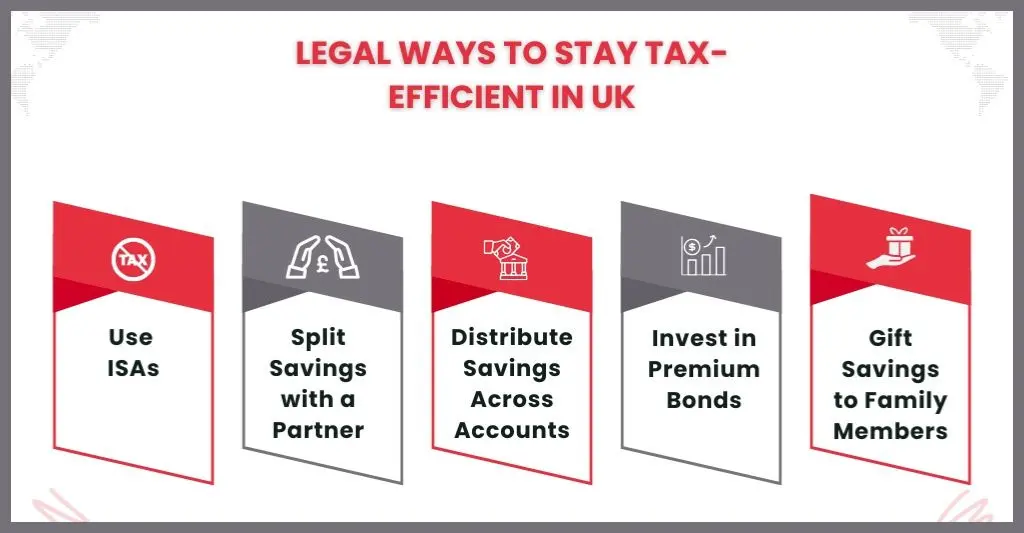
In the UK, you can lower or avoid paying taxes on your savings interest in several smart and lawful ways:
Use an ISA (Individual Savings Account)
Regardless of the amount of money you save, interest generated in a Cash ISA is entirely tax-free. The maximum amount you can save in 2025 across all ISAs is £20,000 each tax year.
Split Savings Between Partners
When two people who are both basic-rate taxpayers use their Personal Savings Allowances, their tax-free interest is essentially doubled.
Use High-Interest Current Accounts Carefully
Some current accounts provide high interest on tiny deposits. Staying below the limit can be facilitated by distributing savings throughout several accounts.
Invest in Premium Bonds
NS&I Premium Bonds offer tax-free prize payouts, but returns are not certain.
Manage Your Total Taxable Income
Contributions to charities or pension plans can lower your taxable income if you’re just below the higher-rate tax bracket, which could raise your PSA.
Gift Savings to Lower-Income Family Members
Sometimes, the total tax payment can be decreased by giving money to a family member who has unused PSA and is exempt from parental tax laws.
For official details, see HMRC’s guide to tax on savings interest and NS&I Premium Bonds.
What Should You Do If You Receive a Tax Bill from HMRC?
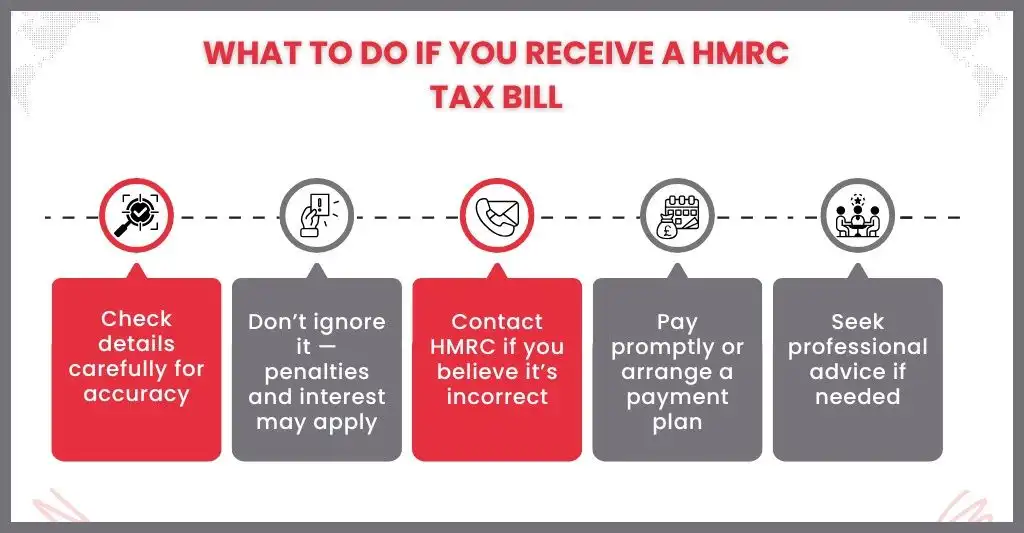
Getting a tax bill through the post is never pleasant, but it’s far easier to deal with if you act straight away rather than putting it to one side. Here’s a clear, step-by-step approach:
Check the Details Carefully:
- To make sure all the numbers are correct, check the bill.
- Verify the accuracy of your deductions, tax code, and income.
- Verify your paychecks, P60/P45, or Self-assessment records if something seems off.
Don’t ignore it
- Interest and fines may result from ignoring a tax bill.
- If HMRC doesn’t get payment, they could pursue enforcement action.
Contact HMRC if You Think It’s Incorrect:
- If you think there is an error, get in touch with HMRC right away to get clarification.
- You can contact them by phone or online using your Tax Account.
Pay the Bill or Set Up a Payment Plan:
- Pay the bill by the due date to avoid additional fees if it is accurate and you can afford it.
- HMRC may be able to set up a Time to Pay plan with you if you can’t pay in full, allowing you to stretch the payment over a number of months.
Seek Professional Advice if Needed:
- You can get help understanding the bill and dealing with HMRC on your behalf from a tax consultant or accountant.
- This is especially useful if you are disputing the bill or if your tax situation is complicated.
Keep All Correspondence
Maintain a record of any correspondence, emails, and phone conversations you have with HMRC, as well as any documents you have sent or received.
Frequently Asked Questions
Do I need to declare my savings interest to HMRC if I am employed and have never filed a tax return?
If you are employed and pay tax through PAYE, and your savings interest is below your Personal Savings Allowance (PSA), you usually do not need to declare it. Banks and financial institutions report your interest directly to HMRC, and if you exceed your allowance, HMRC can adjust your tax code to collect the tax automatically. However, if your interest income is high or you receive other untaxed income, you may be asked to file a Self Assessment tax return.
What is an HMRC tax warning on savings?
An HMRC tax warning on savings is a letter or online notice telling you that your savings interest may be above your tax‑free allowance and that you might owe tax or need a tax code change.
Does interest from foreign savings accounts count towards my Personal Savings Allowance (PSA)?
Yes. Interest from foreign savings accounts is taxable in the UK and counts towards your total savings interest for the year, so you should declare it to HMRC.
How do I check if HMRC has the correct information about my savings interest?
You can check your reported savings interest and tax code in your HMRC Personal Tax Account, which shows the figures sent by banks and any tax due.
What do I do if I think my reported interest or tax bill is wrong?
Contact HMRC as soon as possible with your bank statements and tax documents, so they can correct any errors and update your bill or tax code.
What happens if I do not receive any letter from HMRC by 31 March 2025 but suspect I owe tax?
If you think you owe tax, contact HMRC and report your savings interest rather than waiting for a letter, as delays can lead to interest and penalties.
What types of savings accounts are subject to the savings tax?
Most interest earned from UK bank accounts, building societies, credit unions, peer-to-peer lending, fixed-rate bonds, and some investment funds is taxable. However, interest on Individual Savings Accounts (ISAs) is tax-free and does not count towards your Personal Savings Allowance. It’s important to check the type of account and whether it qualifies for tax exemption
Do HMRC send savings tax warnings or notices to UK pensioners?
Yes. HMRC can send savings tax letters to UK pensioners when their savings interest and state pension push them over their tax‑free allowances, warning that tax may be due and prompting them to check their interest and pay or correct any shortfall.
Conclusion
An HMRC savings account tax warning is no longer unusual, and as interest rates remain higher than they have been for many years, more people are going to receive one for the first time. If that’s you, the most important thing is not to ignore it.
Understanding how savings interest is reported, knowing your allowances, and responding promptly to HMRC communication can prevent unnecessary stress and penalties.
If you need help reviewing a savings tax warning or dealing with HMRC, professional guidance can help ensure the issue is resolved correctly.
Disclaimer: Kindly note this blog provides general information and should not be considered financial advice. We recommend consulting a qualified financial advisor for personalised guidance. We are not responsible for any actions taken based on this content.