
There is an impression that earning £50,000 per year is a huge achievement. In actuality, most people’s concern is not about “What is my annual salary?”; rather, their primary question is, “How much do I really see in my bank account each month?”
Understanding your £50,000 net income in 2026 is more important than ever due to unchanged income tax brackets and national insurance changes caused by increasing living costs in the UK. Your take-home wage affects all aspects of your life – this includes choices like which rental or mortgage options you will consider, childcare expenses, savings goals and lifestyle choices.
We will learn more about your income at £50,000 from 2026 after the income tax and national insurance are deducted and how they work in terms of income brackets and if you’re going to pay 40%. Finally, we’ll discuss how it all fits into your monthly budget.
What Will Your Take-Home Pay Be on £50k in 2026?
If you receive a gross income of £50,000 in the fiscal year 2025/26, your anticipated yearly take-home pay is £39,519.60. This is the amount you receive after Income Tax and National Insurance contributions are subtracted.
Here’s a simplified quick breakdown of your annual, monthly, and weekly earnings.
| Metric | Yearly | Monthly | Weekly |
| Gross Salary | £50,000.00 | £4,166.67 | £961.54 |
| Income Tax | £7,486.0 | £623.83 | £143.96 |
| National Insurance | £2,994.40 | £249.53 | £57.58 |
| Take-Home Pay | £39,519.60 | £3,293.31 | £760 |
The above mentioned numbers are based on the regular 1257L tax code for the financial year 2025/26 in England, Wales, and Northern Ireland. It indicates that there are no other deductions, such as student loan repayments or pension contributions, that would affect your take-home earnings.
Does the 40% Tax Bracket Apply to £50,000 in 2026?
One of the most common questions people ask. So here’s the explanation you need.
No, not on the full £50,000.
But there are few things to understand.
For the 2025/26 tax year (and assuming thresholds remain frozen into 2026):
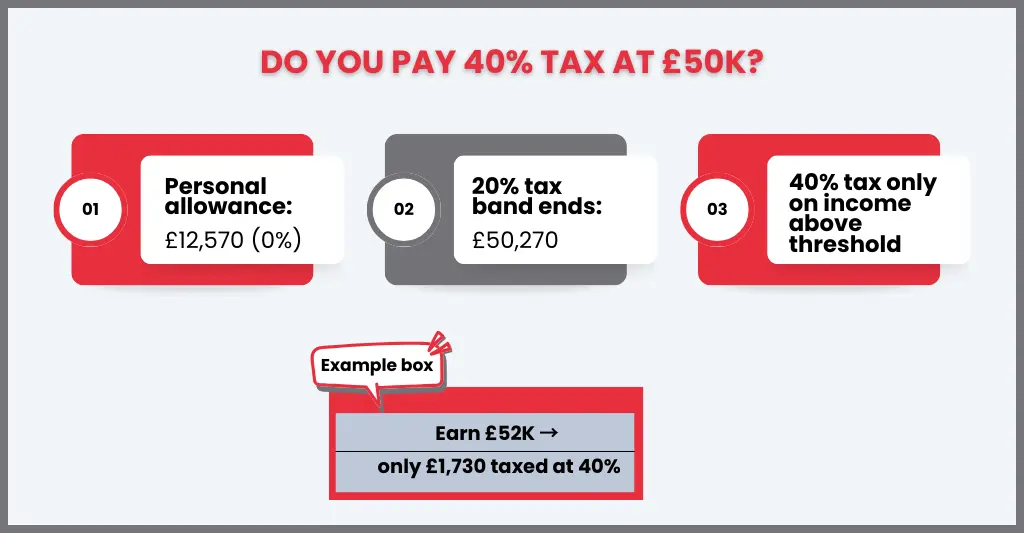
- Personal Allowance: £12,570 (0% tax)
- Basic Rate (20%): £12,571 to £50,270
- Higher Rate (40%): Over £50,270
So if you earn exactly £50,000, your total taxable income falls within the 20% basic rate bracket.
You do not enter the 40% higher-rate bracket.
When Does the 40% Rate Start?
The 40% tax rate only applies to income above £50,270.
For example:
- If you earn £52,000
- Only £1,730 (£52,000 – £50,270) is taxed at 40%
- The rest is still taxed at 20%
This is important because many people assume:
“If I go over £50k, all my income gets taxed at 40%.”
That’s not how the UK tax system works.
The UK has a progressive tax system, which means that only the portion above the threshold is taxed at a higher rate, not your entire wage.
How Far Can a £50k Salary Go in the UK?
A £50,000 income sounds impressive, but in 2026, what matters most is your take-home pay, which is typically between £3,100 and £3,300 per month after tax and National Insurance.
The length of such a journey is primarily determined by your location.
London: Rent and transportation might absorb a substantial portion of your income, making £50,000 feel insufficient if you live alone.
Major UK cities: More manageable, with opportunities for savings if you budget wisely.
Smaller towns: £50,000 can give a comfortable living with steady savings potential.
For a single person without dependents, £50,000 provides financial stability. Families and single-income households may feel stretched, particularly when it comes to daycare or high housing prices.
In short, £50k in 2026 is a good salary, but how comfortable it is will depend on your lifestyle, location, and spending habits.
Can You Afford to Rent or Buy with a £50k Salary in the UK?
Whether you can comfortably rent or purchase a home in the UK on a £50,000 salary is determined by your location, lifestyle, and financial obligations. But in most circumstances, £50,000 puts you in a good position to rent effectively and begin thinking about purchasing.
Renting on a £50k Salary
Housing expenses in the UK vary greatly depending on where you reside. For example, renting a one-bedroom flat in London is significantly more expensive than in Manchester or Birmingham. With a £50,000 yearly salary, your disposable income after rent will be substantially smaller in the city, making it more difficult to save for a deposit or other bills.
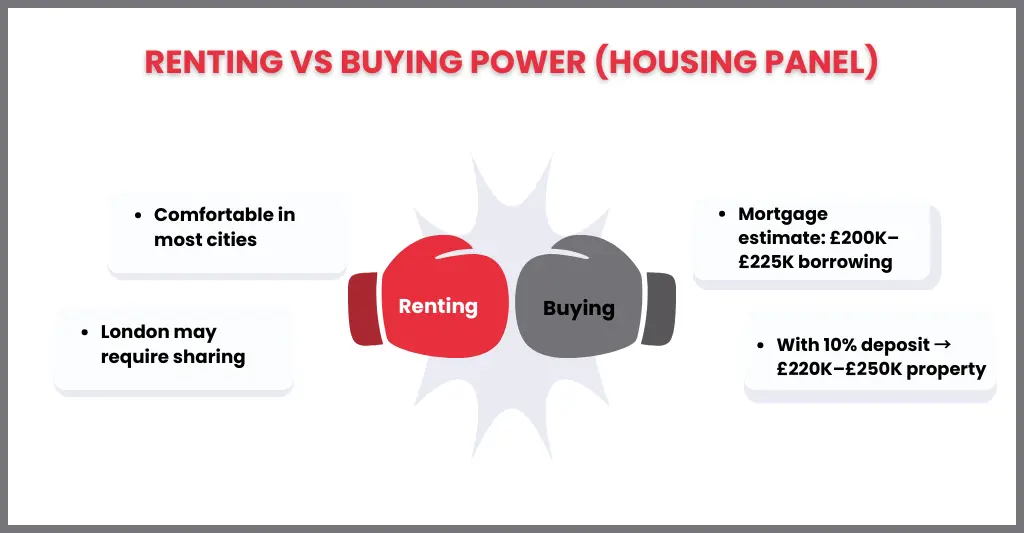
- In most UK cities, this will comfortably cover a 1-2 bedroom rent.
- In London and the South East, you may need to adapt your expectations.
- Sharing with a roommate or partner might make renting larger places more reasonable while remaining within budget.
Buying a Home with a £50k Salary
If you want to buy a home, here’s how your income affects mortgage eligibility: lenders usually provide 4 to 4.5 times your gross annual pay. With a £50,000 salary, you could borrow between £200,000 and £225,000. While this could cover a home in many parts of the UK, it may not be enough in costly housing markets like London or the South East without a big deposit.
- Lenders often lend at a rate of 4-4.5 times your salary, allowing you to borrow between £200,000 and £225,000 for a salary of £50,000. Strong credit and low debt may increase your chances of approval.
- If you have a 10% deposit, you may be able to purchase a property worth £220,000 to £250,000.
What Happens If You Have a Side Hustle or Additional Income?
If you earn money outside of your main employment, it might have an impact on your tax situation, even if it appears to be “just a small extra income.” HMRC considers freelance work, selling on Etsy or Amazon, tuition, consultancy, rental income, and content production all to be taxable.
You May Need to Register for Self Assessment: If your side income exceeds the £1,000 trading allowance, you will often need to register for Self Assessment with HM Revenue & Customs and file a tax return.
The £1,000 allowance means:
- If you earn under £1,000 total (not profit) in a tax year, you may not need to report it.
- If you earn over £1,000, you must declare it , even if your profit is small.
You’ll Pay Tax on the Profit, Not the Revenue: You are taxed on your profit, not your total income. That means:
Income – Allowable Expenses = Taxable Profit
Allowable expenses might include:
- Software subscriptions
- Travel costs
- Equipment
- Home office expenses
- Professional fees
Keeping clean records is essential, especially with Making Tax Digital requirements expanding.
National Insurance May Apply: If your side hustle profits exceed the small profits threshold, you may need to pay:
- Class 2 National Insurance (if applicable)
- Class 4 National Insurance on profits
Your Tax Code Might Change: If HMRC gets to know, apart from salary you earn additional income. Your PAYE tax code for your primary work may be modified to collect tax through your salary.
VAT Could Become Relevant: If your entire taxable turnover reaches the VAT threshold (currently £90,000), you must register for VAT.
What Employers Need to Know About £50k Salary?
A £50,000 salary may appear basic, but it involves a number of tax, payroll, pension, and compliance implications for an employer. Here’s what you should know before arranging or managing a £50,000 salary package.
It’s Not Just £50,000, Consider the True Employment Cost:
When you pay someone £50,000, your actual cost is higher due to:
- Employer National Insurance Contributions (NICs)
- Workplace pension contributions
- Potential benefits (bonus, private healthcare, etc.)
Employer NICs rose to 15% from April 2025 (above £5,000 threshold), adding £6,750/year on £50k – total cost ~£58,000+ with 3% pensions. Report via RTI; bonuses risk 40% band complexity. Employment Allowance (£10,500) helps smaller firms
Higher Rate Tax Band Implications:
£50,000 sits close to the higher rate tax threshold in the UK.
If bonuses or benefits push total taxable income above the threshold:
- The employee moves into the 40% tax band.
- Payroll complexity increases.
- Take-home pay expectations may not match reality.
Clear communication with employees is essential to avoid confusion.
Pension Auto-Enrolment Contributions: Employers are required under auto-enrolment requirements to pay at least 3% of qualified earnings to a workplace pension. Pension payments might be significant over the course of a year for someone earning £50,000. Employers must ensure:
- Accurate pension calculations
- Timely submissions
- Correct contribution percentages
Non-compliance can result in penalties from The Pensions Regulator.
Is £50,000 Enough to Live Comfortably in the UK in 2026?
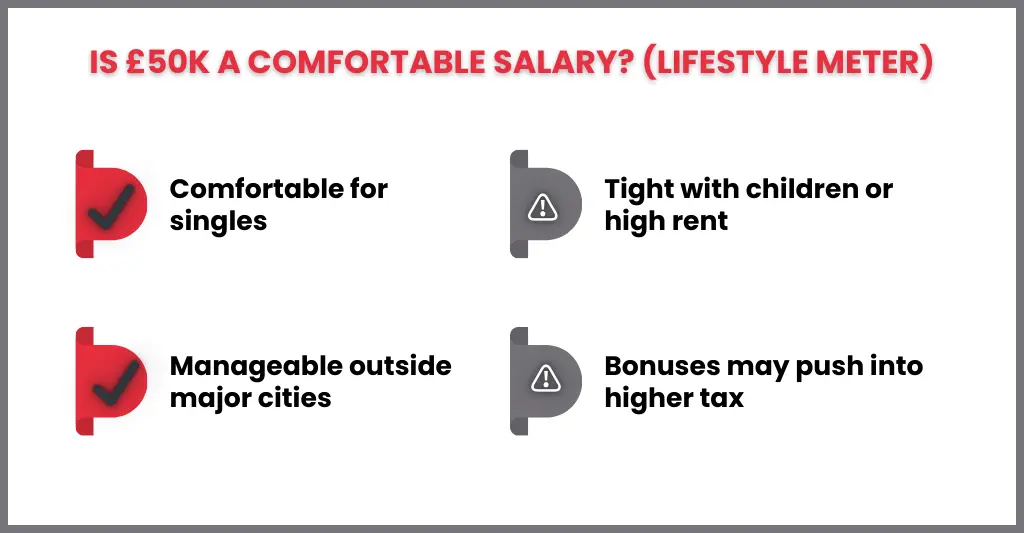
Yes, for most single people, £50,000 is a comfortable middle-income salary, however this varies greatly depending on region and lifestyle.
Key facts:
- Take-home pay: Around £3,000 per month after Income Tax and National Insurance (approximate).
- Outside London: Generally comfortable, covers rent/mortgage, bills, travel, leisure, and savings.
- In London or high-cost cities: Manageable but tighter, especially if renting alone.
- With children: Costs rise significantly due to childcare, housing, and schooling.
- Higher tax band risk: Bonuses pushing income above the higher-rate threshold increase tax to 40%.
How Can You Maximise Your £50,000 Salary in 2026?
To make £50,000 bigger in 2026, focus on tax efficiency and smart planning.
Key steps:
- Increase pension contributions (especially via salary sacrifice) to reduce taxable income.
- Avoid crossing into the 40% tax band by managing bonuses or using pension benefits.
- Use tax-free allowances like ISAs and claim eligible tax reliefs.
- Automate savings and build a 3–6 month emergency fund.
- Review benefits to ensure they are structured tax-efficiently.
FAQs: Frequently Asked Questions
Is £50,000 a good income in the UK?
Yes. It is higher than the UK average pay and is generally regarded enough for a single professional, depending on location.
Can I reduce tax on a £50,000 salary?
Yes. You can minimise your taxable income by increasing your pension contributions, taking advantage of salary sacrifice schemes, and claiming relevant tax benefits.
Does £50,000 put me in a higher tax bracket?
It is close to the higher-rate threshold. If incentives or benefits increase your income beyond the threshold, the excess is taxed at 40%.
£50k after tax in Scotland?
Scotland has devolved income tax bands. For 2025/26, a £50,000 salary yields ~£38,200 take-home (vs. £39,520 rUK) due to different rates: personal allowance £12,570 (0%), starter 19% to £15,397, basic 20% to £26,561, intermediate 21% to £43,662, higher 42% above. Use a Scotland-specific calculator for precision.
Conclusion
An individual will earn £50,000 in the UK by 2026; which is considered an excellent income because you will earn more than the average UK citizen does for that year. Once this amount of money has been earned, it puts you close to being subject to higher rates of tax. Properly planning your finances can create meaningful positive impacts on your financial future after you reach this level of earnings.
£50k seems like a lot of money written down; but in reality it depends on each person’s individual situation as to how much will actually be there at the end of each month. The income tax, national insurance and additional things such as pension contributions, benefits received from employers and the cost of living in some areas all determine what an individual can afford on £50,000 per year.
If there is proper pension strategy, effective pension planning, suitable funding through salary, discipline with your budgeting, and established knowledge regarding the tax thresholds; then one could comfortably live on approximately £50,000 in many parts of the UK.
Disclaimer: Kindly note this blog provides general information and should not be considered financial advice. We recommend consulting a qualified financial advisor for personalised guidance. We are not responsible for any actions taken based on this content.